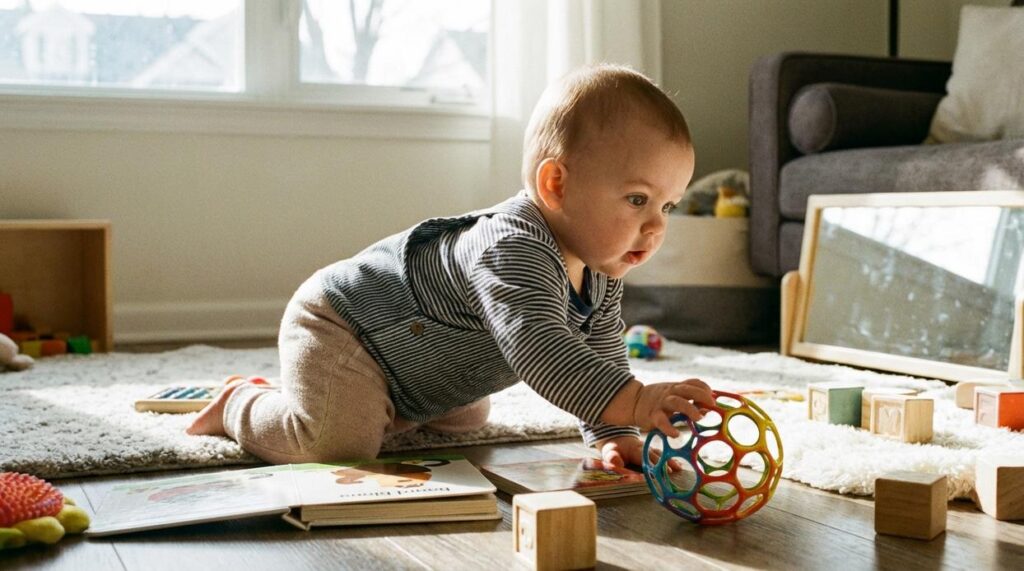

Remember the first time you heard your baby say “ma-ma”? It’s a magical moment, right? But then reality hits: What does this mean for their development?
Language acquisition education sounds overwhelming, but it’s not about having a degree. It’s about connection. As a mom who’s been through it, I’ve realized you don’t need textbooks.
You need your voice.
You might wonder, how do I teach language without a classroom? The answer is simpler than you think. The secret lies in your daily routines.
Honestly, you already have the most important tools.
This guide will translate the intimidating science of language development learning into easy, loving actions. Start today. We’ll make it clear and stress-free.
Trust me, it’s about connection, not perfection. to making your everyday interactions count.
The Real Deal with Language Acquisition: Diaper Edition
Language acquisition (sounds) fancy, right? It’s just a kid figuring out how to talk and listen. Real simple.
The academics might call it “contextual learning,” but we call it narrating a diaper change. Yep, that’s right. You’re elbow-deep in baby wipes, and boom, you’re teaching your kid to speak.
Here’s the scoop: there are two sides to this coin. Receptive language is what they understand (like when you say “no” and they keep doing it anyway). Then there’s expressive language.
That’s what they can actually say, like “mama” or “cookie” (the important stuff).
Think of it like a word bank. They fill it up long before they start making withdrawals. So, when you’re babbling through that diaper change, you’re depositing words into their little bank.
The best part? You don’t need flashcards or formal lessons. Just talk.
Sing. Make weird sounds. That’s the secret sauce.
Creating a “language-rich environment” isn’t about drowning them in words. It’s about interaction. You’re not running a school.
You’re just living life with a tiny human who’s soaking it all up. And yes, this is natural. You’re meant to help this, not force it.
And while you’re at it, remember that language is just one part of their world. There’s more to it, like physical growth milestones children. But for now, keep narrating those diaper changes.
Who knew talking about poop could be so educational?
Your Daily Routine: A Language Learning Powerhouse
Everyday routines are your secret weapon for language development learning. You might not think about it, but mealtime is a golden opportunity. Instead of the usual “here’s your banana,” try describing it: “Look at this yellow banana!
It’s so soft and sweet. Mmm.” This paints a picture with words and makes language come alive.
Getting dressed is another perfect moment. Narrate the steps: “Let’s put on your blue socks. One sock on your left foot, one sock on your right foot!” Your child learns colors, numbers, and body parts without even realizing it.
It’s like a little educational game.
Then there’s bath time. Talk about the warm water and the floating duck. Name body parts as you wash them. “Let’s wash your toes.
Even running errands can be a language lesson. Point out cars, dogs, and trees. “We’re going in the big red car. Vroom vroom!” It’s these everyday experiences that build vocabulary and comprehension.
Now your nose!” These moments, filled with simple interactions, are rich in learning potential.
And let’s not forget the magic of “parentese.” You know, that sing-songy, higher-pitched voice parents naturally use. Studies show it helps babies tune in to language. It might feel silly, but it works.
Your voice becomes a beacon for learning.
Consistency is key. Repetition helps cement new words and concepts. It’s like practicing a new skill.
Practice makes perfect. This might sound daunting, but it’s all about weaving language naturally into your day.
For more detailed strategies, check out a guide to language development in early childhood. It offers takeaways you can easily incorporate into your routine.
Incorporating language into daily life isn’t hard. It’s about being intentional with your words. So, next time you’re with your little one, remember: every moment is an opportunity for language development.
It’s right there, in the fabric of your day, waiting to be tapped.
Play-Based Learning: Activities to Spark Speech
Play is more than just fun for kids; it’s how they learn. Seriously. It’s their work.
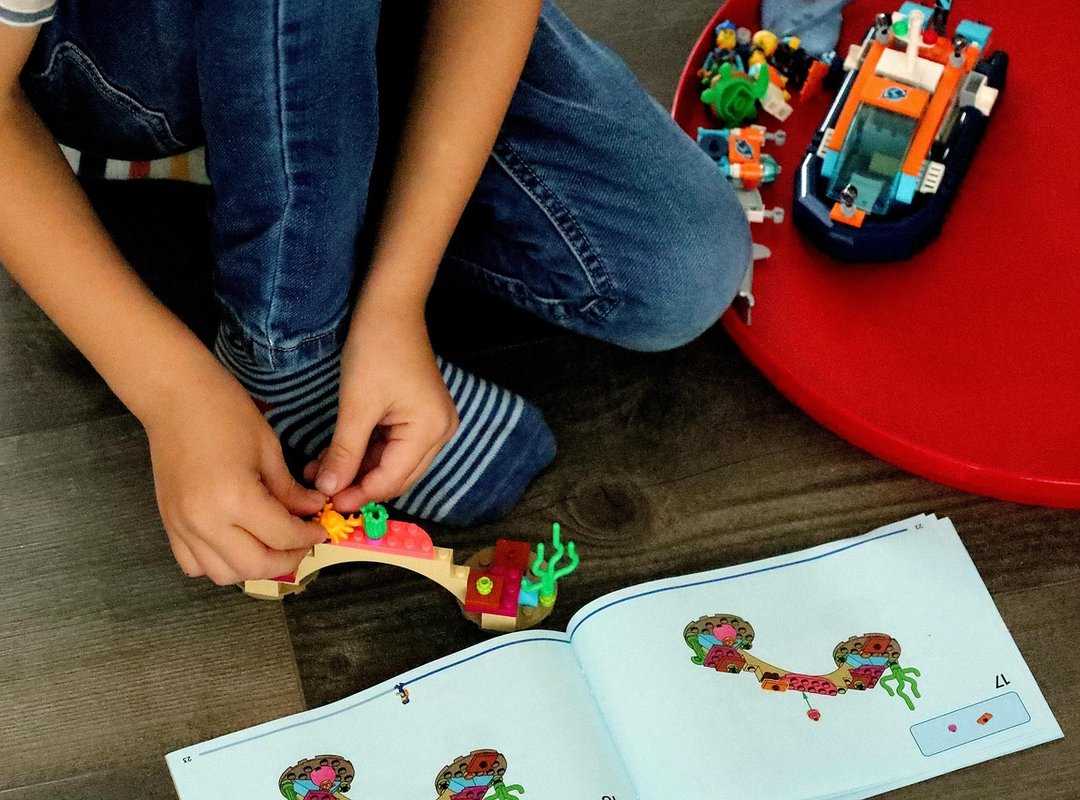
You might think of it as downtime, but for children, it’s full-on learning mode. When it comes to language development learning, nothing beats play.
Reading aloud? It’s not just about finishing a book. Focus on interaction.
I ask questions like “Where is the doggy?” and let them point and giggle. I make silly animal sounds. You know you’ve done it.
This isn’t about just reading words; it’s about making them come alive.
Singing songs? Absolute gold. The rhythm and rhyme of “The Wheels on the Bus” teach patterns and sounds effortlessly.
Don’t worry about being a great singer. Just sing. Kids love it, and they learn without even realizing it.
Plus, who doesn’t love a good sing-along?
Mirror play is a riot. Making faces in the mirror with your baby isn’t just adorable; it’s educational. They learn about facial expressions and how to move those little mouths to make sounds.
And you can’t help but laugh at the faces they pull. It’s all about connecting actions to words.
Building blocks might sound basic, but they’re magic. I narrate as we build a tower with simple words like “up, up, up” and then watch their faces when it goes “boom!” There’s no better way to link words to actions.
These activities? No special equipment needed. Just your presence and engagement.
Easy, right? And if you’re curious about how this connects to emotional growth, check out Child Emotional Development 101. Because understanding emotions and language?
They’re two sides of the same coin.
Milestones & Support: Stay Cool and Carry On
Every kid marches to their own beat, right? It’s easy to get caught up in the anxiety of milestones when every other parent seems to have a child who’s reciting Shakespeare at two. Spoiler alert: development isn’t a race.
Sure, there are general guidelines. Babbling? Usually around six months.
First words? Maybe by a year. Simple phrases?
Two-ish. But these are just that. Guidelines.
Trying to communicate their needs? That’s the stuff that matters.
The real magic lies in observing your child’s overall communication. Are they making eye contact? Using gestures?
If something feels off, don’t panic. Chatting with a pediatrician or a speech-language pathologist can be a proactive move, not an admission of failure. Think of it as getting a second opinion (like when you wondered if Ross and Rachel were really on a break).
Your intuition as a parent is solid. You know your child best. Remember, language development learning is a journey, not a checklist.
Trust yourself, and your little one will find their way.
Start The Talk Today
You’ve cracked the code on language development learning. It’s not about mastering a curriculum; it’s connecting with your child in those everyday moments. Remember feeling like you weren’t doing enough?
That’s nonsense. The secret’s in the moments you already share. It’s incredible that these routine interactions transform into learning treasures.
Here’s what you should do next: pick just one activity from this guide. Narrate bath time. Sing another song before bed.
It doesn’t matter which one. Just start. You’ll see (it’s) not about perfection.
It’s about starting the conversation. Your child’s development thanks you. Now, go talk!

 Jorveth Havendale is the kind of writer who genuinely cannot publish something without checking it twice. Maybe three times. They came to tips and advice through years of hands-on work rather than theory, which means the things they writes about — Tips and Advice, Child Development Insights, Daily Mum Moments, among other areas — are things they has actually tested, questioned, and revised opinions on more than once.
That shows in the work. Jorveth's pieces tend to go a level deeper than most. Not in a way that becomes unreadable, but in a way that makes you realize you'd been missing something important. They has a habit of finding the detail that everybody else glosses over and making it the center of the story — which sounds simple, but takes a rare combination of curiosity and patience to pull off consistently. The writing never feels rushed. It feels like someone who sat with the subject long enough to actually understand it.
Outside of specific topics, what Jorveth cares about most is whether the reader walks away with something useful. Not impressed. Not entertained. Useful. That's a harder bar to clear than it sounds, and they clears it more often than not — which is why readers tend to remember Jorveth's articles long after they've forgotten the headline.
Jorveth Havendale is the kind of writer who genuinely cannot publish something without checking it twice. Maybe three times. They came to tips and advice through years of hands-on work rather than theory, which means the things they writes about — Tips and Advice, Child Development Insights, Daily Mum Moments, among other areas — are things they has actually tested, questioned, and revised opinions on more than once.
That shows in the work. Jorveth's pieces tend to go a level deeper than most. Not in a way that becomes unreadable, but in a way that makes you realize you'd been missing something important. They has a habit of finding the detail that everybody else glosses over and making it the center of the story — which sounds simple, but takes a rare combination of curiosity and patience to pull off consistently. The writing never feels rushed. It feels like someone who sat with the subject long enough to actually understand it.
Outside of specific topics, what Jorveth cares about most is whether the reader walks away with something useful. Not impressed. Not entertained. Useful. That's a harder bar to clear than it sounds, and they clears it more often than not — which is why readers tend to remember Jorveth's articles long after they've forgotten the headline.